
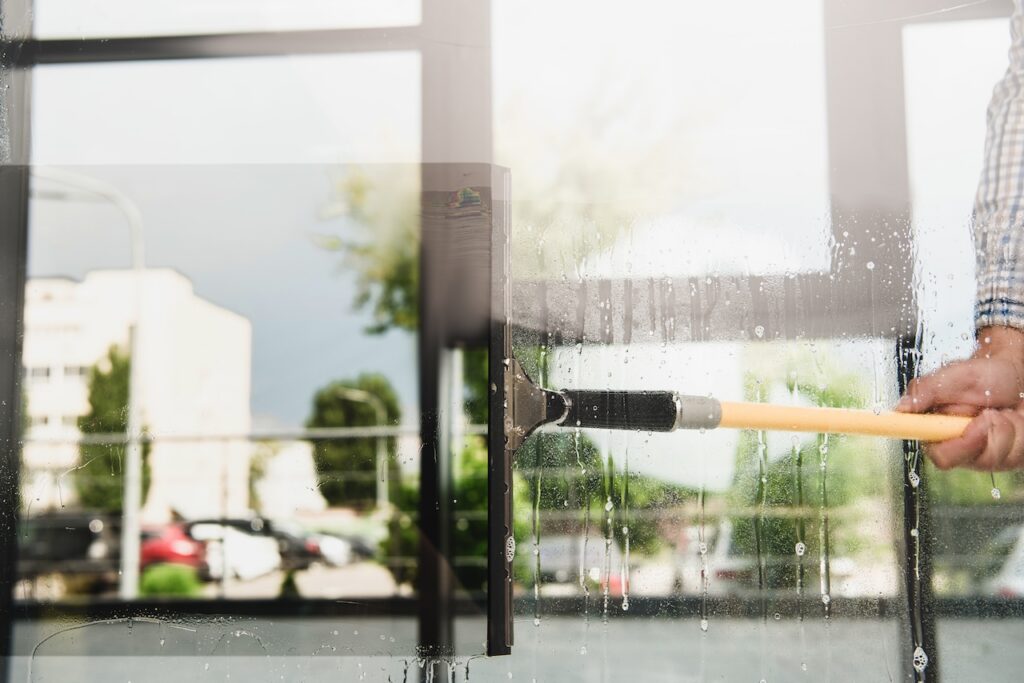
Quick Answer: Hard water stains on windows form when mineral-rich water evaporates and leaves calcium and magnesium deposits behind. NYC windows are especially prone to this because of facade runoff, AC condensation, and rooftop irrigation. Fresh deposits wipe away easily, but stains left untreated can etch the glass permanently. Catching them early, and calling in a professional, keeps your windows looking their best.
If you live or work in a building with a view, you already know how fast a clear pane can turn cloudy. That haze is usually hard water stains on windows, and in a city like New York, they’re almost impossible to avoid. For a closer look at how professionals tackle window care across Manhattan, check out this guide to professional window cleaning services.
What Causes Hard Water Stains on Windows?
Hard water contains dissolved minerals, mainly calcium and magnesium. When that water lands on glass and evaporates, the minerals don’t evaporate with it. They stay put, forming a thin residue. One splash won’t do much damage. But repeat that process day after day, and the residue builds into a visible film.
Over time, this buildup becomes tougher to remove. Fresh mineral deposits sit lightly on the surface of the glass. Older deposits bond more stubbornly, especially when combined with dust, pollution, or soap scum, making your usual glass cleaner far less effective.
Why NYC Windows Are Particularly Susceptible
Manhattan’s architecture and density create the perfect storm for mineral buildup. A few common culprits:
- Runoff from concrete, brick, and stone facades: Rain picks up minerals as it runs down building exteriors, splashing onto window ledges and glass below.
- AC unit and condensate drips: Window units constantly release condensation that evaporates and leaves spots, especially on lower panes.
- Facade cleaning and building maintenance: Power washing and routine upkeep often send mineral-laden water cascading past windows.
- Terrace gardens, roof decks, and irrigation: Watering plants on a terrace or roof deck can splash or drip onto nearby glass.
- Construction and renovation residue: Nearby construction kicks up dust and debris that mixes with water and clings to windows.
How to Recognize Hard Water Stains on Glass
Not sure if what you’re seeing is mineral buildup or something else? Look for:
- White, chalky spots or streaks
- Cloudy patches that remain even after a routine wipe-down
- Hazy glass that looks worse in direct sunlight
- Staining concentrated beneath AC units, ledges, or other runoff points
- Deposits collecting around window edges and frames
Hard Water Stains vs. Other Window Problems
Mineral staining looks different from everyday dirt or cleaning residue, which usually wipes away easily. It’s also different from condensation between panes, which shows up as fogging trapped inside double-pane glass. That fogging is actually a sign of seal failure, not a staining issue, and it typically requires window repair or replacement rather than cleaning.
Can Hard Water Stains Permanently Damage Windows?
Fresh hard water stains on windows are removable. The minerals sit on top of the glass and haven’t bonded with it yet. But left alone, the alkaline minerals can etch the glass surface, and etching is permanent. One telltale sign: if the spot is still visible when the glass is wet, you’re likely dealing with etching rather than surface buildup.
Aggressive scrubbing or the wrong cleaning products can make matters worse, scratching the glass or damaging protective coatings. What started as a removable stain can quickly become permanent damage. Addressing staining early, before it has time to set in, is the best way to protect your windows.
How Professionals Remove Hard Water Stains From Windows
Skilled window cleaning teams start by assessing the type and severity of staining to choose the right approach. From there, they use cleaning solutions designed to break down mineral deposits without harming the glass. For more severe cases, glass restoration techniques can help bring clarity back to windows that have started to etch.
Why Professional Hard Water Stain Removal Matters in NYC
New York’s buildings bring unique challenges that make DIY cleaning risky. Hard-to-reach windows in apartment buildings and high-rises require safe access and proper equipment, something most residents simply don’t have on hand. Large glass storefronts, lobbies, and commercial facades also demand careful, even treatment to avoid streaking or damage.
Specialty glass and modern coatings are especially vulnerable. Harsh products or abrasive tools can strip coatings or scratch surfaces, and replacing damaged glass costs far more than regular professional care. Downtown Window Cleaning’s experienced team knows how to treat every type of glass safely, protecting your investment while keeping your windows crystal clear.
Ready to see the difference? Contact Downtown Window Cleaning today for an estimate.
Frequently Asked Questions
What’s the difference between window cleaning and glass restoration?
Window cleaning removes everyday dirt, dust, and light mineral buildup from the surface. Glass restoration goes a step further, addressing deeper issues like etching or stubborn mineral deposits that standard cleaning can’t fix.
How often should NYC windows be professionally cleaned to prevent mineral buildup?
Most NYC residents and businesses benefit from professional cleaning every one to three months, depending on exposure to runoff, AC units, and nearby construction. Buildings with heavy facade runoff may need more frequent visits.
Will hard water stains eventually disappear on their own?
No. Hard water stains on windows don’t fade on their own and tend to worsen over time as more mineral layers build up. Without cleaning, fresh deposits can eventually etch the glass permanently.
What’s the best time of year to clean windows in NYC?
Spring and fall are ideal, after winter grime and before summer humidity sets in. Regular cleaning throughout the year, though, is the best defense against hard water staining.
